
Students & Families
Buying Near NYC-Area Universities: NYU, Columbia, Cornell Tech, and Stony Brook
By Emma (Qian) Niu · June 7, 2026 · 8 min read
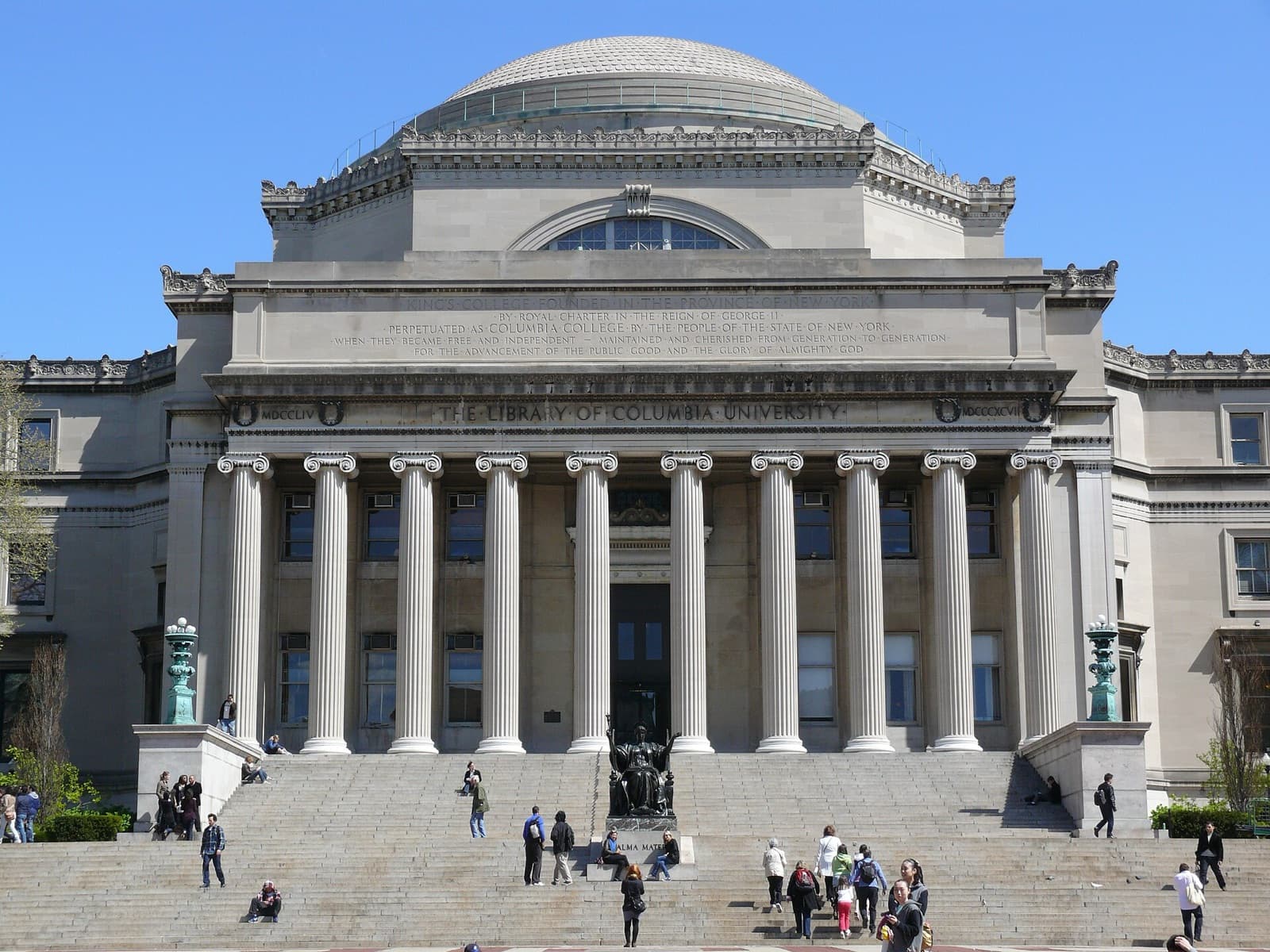
Ad Meskens — CC BY-SA 3.0 · Wikimedia Commons
Every August, a quiet migration reshapes New York's housing market. Leases turn over, parents fly in to co-sign, and a particular kind of buyer starts doing math on a napkin: if I'm paying four years of rent anyway, should I just buy? For families with a student heading to NYU, Columbia, Cornell Tech, or Stony Brook — and for investors who see steady, replenishing rental demand in a campus zip code — the question is a reasonable one. This guide walks through what each campus area is actually like to buy in: the housing stock, the price level, the rental picture, and the commute.
As of June 2026. Market figures and rates move constantly; treat everything below as a starting point to verify, not a quote.
This is general educational information, not legal, tax, immigration, or financial advice. Real estate, tax, and mortgage rules change, and they apply differently to every buyer — especially non-residents and first-time buyers. Consult a licensed attorney, CPA, and mortgage professional, and confirm current figures with the official sources linked at the end before you act.
The money backdrop, before any neighborhood
Three numbers shape every NYC purchase regardless of campus. First, mortgage rates: Freddie Mac's Primary Mortgage Market Survey put the 30-year fixed at 6.49% as of June 25, 2026, holding in a narrow 6.47%–6.52% band through the month. Second, closing taxes. New York City's Real Property Transfer Tax is 1% under $500,000 and 1.425% at or above $500,000, applied to the whole price — and for purchases at $1 million or more, the buyer also owes the state mansion tax, which starts at 1% and steps up through brackets (1.25% at $2M, 1.5% at $3M, and higher above that). Third, the mortgage recording tax on financed condos and houses runs roughly 1.8% under $500,000 and 1.925% at or above $500,000 of the loan amount (co-ops are exempt because they're shares, not real property).
These costs reward buying once and holding. If your student is in a one-year master's program, renting almost always wins. For a four-year stay, or an investment you'll hold past graduation, the math gets interesting. Browse current listings to anchor your own numbers.
NYU — Greenwich Village and the downtown core
NYU has no single walled campus; it's woven into Greenwich Village, the East Village, and increasingly the financial district and Brooklyn. The housing stock is the most expensive and the most varied in this guide: pre-war co-ops with board approval hurdles, glassy condos, and the occasional townhouse. Condo prices downtown sit well into seven figures — citywide, the Manhattan condo median was around $1.75 million in Q1 2026 per StreetEasy data, and the Village runs above that.
Rental demand here is exceptionally deep and year-round, not just September, because the area draws graduate students, faculty, and non-NYU professionals alike. That breadth is what makes it resilient as an investment. Transit is the best of any campus on this list: the West 4th, Astor Place, and Union Square stations put nearly every subway line within reach. The trade-off is simple — you pay a premium for being in the center of everything, and the mansion tax bites at this price level. Condos tend to be more practical than co-ops for non-resident or investor buyers, since co-op boards often restrict subletting and scrutinize finances heavily.
Columbia — Morningside Heights and Upper Manhattan
Columbia anchors Morningside Heights, a quieter, more residential pocket of upper Manhattan, with its expanding Manhattanville campus pushing north. The building stock is dominated by sturdy pre-war co-ops, which keeps entry prices below the downtown core: StreetEasy data through spring 2026 showed Morningside Heights condo medians fluctuating around the $1 million to $1.6 million range, with co-ops typically lower. That co-op prevalence is the defining feature here — it means more inventory at relatively accessible prices, but also more board approvals and sublet rules to navigate.
Rental demand is steady and academic-calendar-driven, anchored by a large graduate population and the medical campus uptown. Transit runs on the 1 train along Broadway, with the express B and C nearby; commutes downtown are direct but the 1 is a local. For a buy-and-hold investor, the lower entry point and reliable tenant pipeline are the draw; for a family, the residential calm is. Just go in knowing co-op rules can complicate both renting it out and reselling. Our neighborhoods guide goes deeper on upper Manhattan.
Cornell Tech — Roosevelt Island
Cornell Tech is the newest and most self-contained of these campuses, sitting on a purpose-built site on Roosevelt Island, just south of the Queensboro Bridge. The island is unusual: it's a planned, low-density strip in the East River with a mix of newer residential buildings, and its housing market behaves differently from mainland Manhattan — more new construction, fewer pre-war walk-ups, and a contained inventory. Several of the buildings are part of long-standing ground-lease and affordability programs, so read the fine print on any unit carefully.
Rental demand is narrower than the NYU or Columbia areas — it's a smaller campus and a smaller island — but it's consistent and tied directly to a graduate tech program. Transit is the island's signature quirk: the F train stops at the Roosevelt Island station, a roughly three-minute walk from campus, and the Roosevelt Island Tram runs to 59th Street and Second Avenue in Manhattan in about four to five minutes. Both use standard MTA fare. The island feels removed yet is genuinely a short hop from Midtown — appealing if you value quiet and quick access, less so if you want street-level variety. Newer condo stock here can make a cleaner investment than a co-op elsewhere; see our new developments for comparable construction.
Stony Brook — Suffolk County, Long Island
Stony Brook is the outlier: a large suburban campus on the North Shore of Long Island, roughly 60 miles from Manhattan. The buying proposition is completely different. Instead of seven-figure condos, you're looking at single-family houses and townhouses in Suffolk County at a fraction of city prices — the most house-per-dollar of any option here. For families relocating with a student, or investors who want a freestanding rental rather than a board-governed apartment, that's the appeal.
Rental demand is real but seasonal and campus-tied, concentrated in the towns immediately around the university. Transit is car-oriented: the LIRR Port Jefferson branch has a Stony Brook station at the north end of campus with bus connections to central campus, and reaching Manhattan means a transfer and a long ride. Most residents drive. For an investor, suburban Long Island brings lower entry prices and standard property ownership (no co-op board), but also property-tax bills that run high by national standards and a tenant pool that thins outside the school year. If a suburban, owned-house model appeals, our gated communities coverage looks at comparable Nassau options too.
How to think about it
| Campus | Housing character | Price level | Transit |
|---|---|---|---|
| NYU | Mixed condos / pre-war co-ops, townhouses | Highest | Best — many subway lines |
| Columbia | Mostly pre-war co-ops | Moderate–high | 1 train (local) |
| Cornell Tech | Newer residential, contained inventory | Moderate–high | F train + Tram |
| Stony Brook | Suburban houses / townhouses | Lowest per sq ft | LIRR + car |
The right answer depends less on the campus than on your horizon. A one-year program rarely justifies buying. A four-year stay, a sibling pipeline, or a genuine investment thesis can. Co-ops cost less but restrict subletting and resale; condos and houses give you flexibility at a higher price. And every purchase at $1 million-plus meets the mansion tax, so price thresholds matter more than they look. When you're ready to run real numbers on a specific building, contact our team — we'll model the carrying costs honestly before you commit.
Sources
- Freddie Mac, Primary Mortgage Market Survey — https://www.freddiemac.com/pmms
- NYC Department of Finance, Real Property Transfer Tax — https://www.nyc.gov/site/finance/property/property-real-property-transfer-tax-rptt.page
- NYC Department of Finance, Mortgage Recording Tax — https://www.nyc.gov/site/finance/property/property-mortgage-recording-tax-mrt.page
- NYS Department of Taxation & Finance, Real estate transfer tax — https://www.tax.ny.gov/bus/transfer/rptidx.htm
- MTA, Subway and bus fares — https://www.mta.info/fares-tolls/subway-bus and https://omny.info/fares
- Cornell Tech, Visit Us — https://tech.cornell.edu/visit-us/
- Stony Brook University, Getting Around — https://www.stonybrook.edu/commcms/beyondthebrook/gettingaround.php
- StreetEasy, NYC Housing Market Data — https://streeteasy.com/blog/nyc-housing-market-data/
Let's talk about your next move.