Immigrant Life
A Newcomer's Guide to Flushing and the NYC Chinese Community
By Kevinn Li · June 14, 2026 · 8 min read
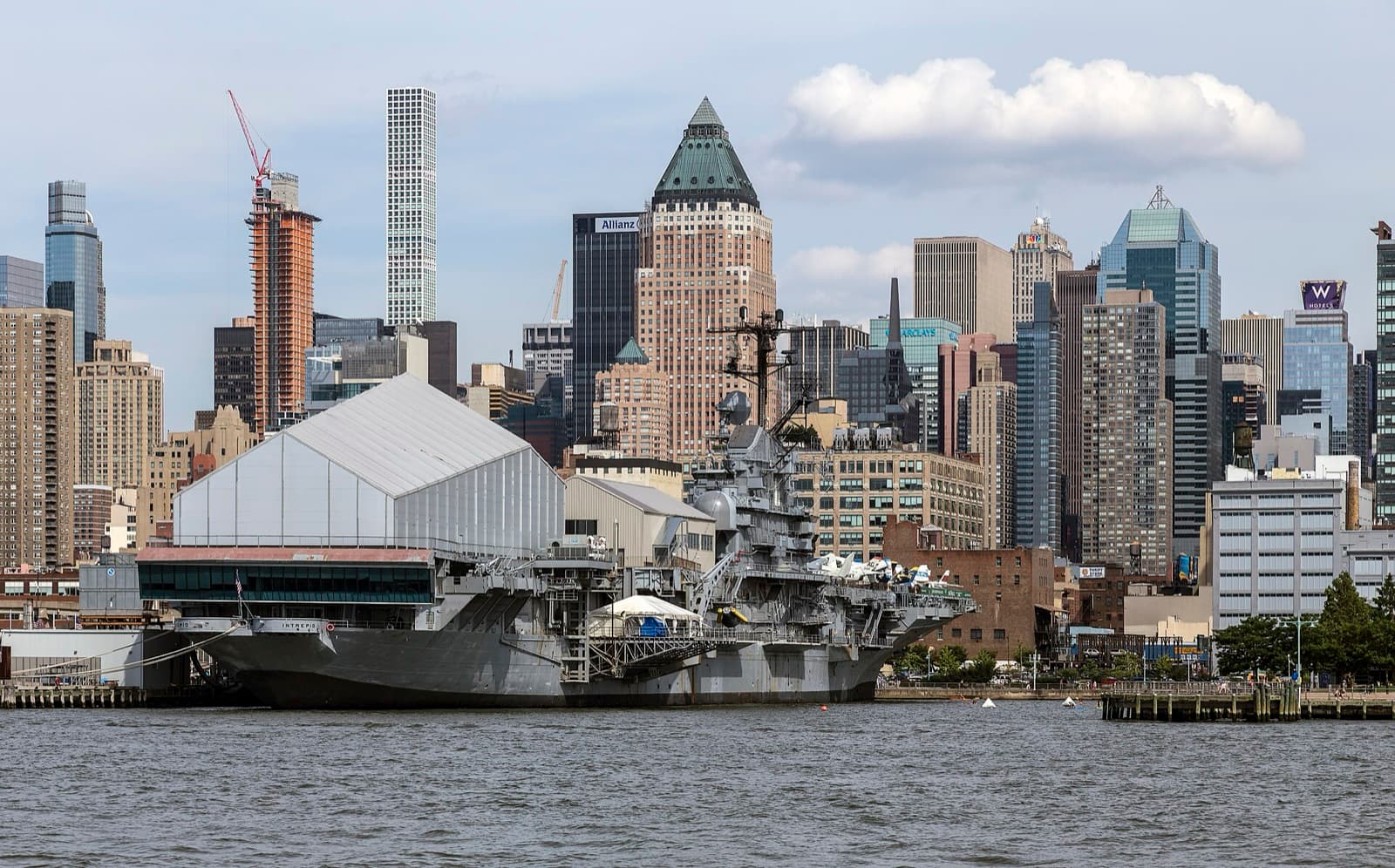
Acroterion — CC BY-SA 4.0 · Wikimedia Commons
Step off the 7 train at Main Street, climb the stairs into the roar of Roosevelt Avenue, and you understand Flushing in about thirty seconds: hand-pulled noodles steaming in a basement food court, a bubble-tea line out the door, signage in three scripts, and a sidewalk so busy you have to time your steps. For many newcomers to greater New York, Flushing is the first place that feels legible—where you can open a bank account, see a doctor, buy a winter coat, and find dinner all in one afternoon, all within a few blocks.
This guide walks through four neighborhoods that have grown into anchors for Mandarin- and Cantonese-speaking New Yorkers: Flushing in Queens, Elmhurst in Queens, and Sunset Park and Bensonhurst in Brooklyn. We describe the places themselves—how you get there, what's on the street, what services exist, and what the housing stock looks like—so you can decide which corner of the city fits your life.
As of June 2026. Fares, mortgage rates, tax rules, and market figures below were current when this was written. All of them change—verify anything that affects a real decision against the official sources listed at the end.
Flushing, Queens: the downtown of the diaspora
Flushing's center is the intersection of Main Street and Roosevelt Avenue, one of the busiest pedestrian hubs in the city outside Manhattan. The transit knot is the draw. The 7 subway terminates here and runs 24 hours to Midtown and Hudson Yards; the same station is a stop on the Long Island Rail Road's Port Washington Branch, which reaches Penn Station and Grand Central in roughly 20–30 minutes. A dense web of buses—the Q44 Select Bus Service, Q20, Q25, Q26, Q65, and more—fans out across Queens from the same corner.
Food is the neighborhood's signature. Multi-level food courts, regional restaurants spanning the breadth of Chinese cuisine, grocery halls, bakeries, and herbal-medicine shops cluster along Main Street, Roosevelt, and the side streets. Everyday errands—remittances, tax preparation, immigration paperwork help, dentistry, optometry—are available in-language within walking distance.
Housing character: Flushing has the most varied building stock of the four. Downtown blocks have seen a wave of mid- and high-rise condominium towers, many with retail podiums; walk out a few blocks and you reach quieter streets of one- and two-family homes and smaller co-op and rental buildings. Browse current listings and our roundup of new developments to see the range.
Elmhurst, Queens: the geographic heart
A few stops west, Elmhurst sits at the demographic center of Queens, bounded roughly by Roosevelt Avenue, Junction Boulevard, the Long Island Expressway, and the LIRR tracks. Its transit is a strength: the E, F, M, and R trains stop at Elmhurst Avenue, Grand Avenue–Newtown, and Woodhaven Boulevard, while the 7 train runs along Roosevelt Avenue at the neighborhood's edge—so you have both an express route into Manhattan and a local one.
Elmhurst's commercial life runs along Broadway and Queens Boulevard, anchored by Queens Center, a large enclosed mall with department stores and national brands. Side streets carry a deep run of restaurants and groceries from across Asia and Latin America.
Housing character: much of Elmhurst is detached and multi-family houses, with pockets of rowhouses, six- and seven-story apartment buildings, and large complexes like LeFrak City. Studios and one-bedrooms here have historically been among the more affordable in the area, which makes it a common landing spot for students and first-time renters.
Sunset Park, Brooklyn: hillside and waterfront
Across the East River, Sunset Park stretches from a green hilltop with skyline views down to the Brooklyn waterfront. The neighborhood's spine is Eighth Avenue, served by the N train at the Eighth Avenue station; the D, N, and R trains also run along Fourth Avenue, putting Manhattan within a single ride.
Eighth Avenue is the commercial heart—restaurants, groceries, bakeries, and bilingual professional services line the corridor. Down by the water, Industry City, a 35-acre former industrial complex, has been converted into a campus of food halls, makers, retail, and event space. The neighborhood is also in a building cycle: a 28-story, roughly 500-unit mixed-use tower is rising on Eighth Avenue, with smaller projects nearby.
Housing character: Sunset Park is largely brick rowhouses and limestone-front townhouses, many configured as two- and three-family homes, alongside walk-up apartment buildings and a growing number of new mid-rise developments near transit.
Bensonhurst, Brooklyn: low-rise and family-scaled
Further south, Bensonhurst is one of Brooklyn's densest markets for one- and two-family homes. The elevated D train runs above 86th Street—express trains reach Midtown in roughly an hour—and the N train on the Sea Beach Line offers a direct route toward Canal Street. Broad commercial corridors run along 18th Avenue (Cristoforo Colombo Boulevard), Bay Parkway, and 86th Street, lined with bakeries, greengrocers, and cafés that reflect generations of immigrant business.
Housing character: the building stock skews to single-family residences, attached homes, and low- to mid-rise apartment buildings, with architecture ranging from early-20th-century houses to recent construction. It reads as a quieter, more residential alternative to the denser cores of Flushing or Sunset Park.
Language access and community services
You do not need fluent English to use city services. Under NYC's Local Law 30, covered city agencies must translate common documents into ten designated languages—Chinese among them—and provide telephone interpretation in 100-plus languages. When you call 311, you can request interpretation; if an agency fails to provide it, you can file a "language access complaint" through 311.
The Queens Public Library is one of the most useful free resources for newcomers. Its Adult Learning Centers and New Americans Program offer free ESOL classes, high-school-equivalency and citizenship preparation, and job-readiness workshops; many are free with a library card. Demand is high—the Flushing Adult Learning Center (41-17 Main Street) runs a lottery for open seats—so apply early. Community nonprofits across these neighborhoods add legal clinics, benefits screening, and senior and youth programming.
The money side: what to verify before you commit
If you're thinking about buying, two New York rules matter regardless of neighborhood. The NY State transfer tax is paid by the seller at $2 per $500 of price (0.4%). The "mansion tax" is a buyer-paid surcharge that starts at 1% on residential purchases of $1 million or more and rises in brackets to 3.9% at the top—a real factor in pricier Flushing condos. Watch the cliff: it's based on the full price, so a purchase just over a threshold can owe meaningfully more.
Financing moves with the market. In late June 2026, Freddie Mac's weekly survey put the average 30-year fixed mortgage near 6.5%, roughly a quarter-point below a year earlier. On the transit side, the MTA's base subway and bus fare rose to $3.00 in January 2026 (reduced fare $1.50), with OMNY fare-capping now permanent—after 12 paid rides in a 7-day window, the rest of the week is free.
This article is general educational information, not legal, tax, immigration, or financial advice. Rules and figures change. Confirm anything that affects a real decision with a licensed professional and the official sources below. When you're ready to look at specific homes, contact our team—we're a licensed New York brokerage and happy to walk you through any of these neighborhoods.
Sources
- MTA — 2026 fare changes and OMNY: https://www.mta.info/press-release/mta-board-adopts-fare-and-toll-increases-take-effect-january-2026
- MTA — Flushing–Main Street station: https://www.mta.info/stations/flushing-main-street
- Freddie Mac — Primary Mortgage Market Survey: https://www.freddiemac.com/pmms
- NY State Dept. of Taxation & Finance — Real estate transfer tax: https://www.tax.ny.gov/bus/transfer/rptidx.htm
- NYC Mayor's Office of Immigrant Affairs — Language access (Local Law 30): https://home.nyc.gov/site/immigrants/language-needs/language-and-disability-access.page
- NYC311 — Language access: https://portal.311.nyc.gov/article/?kanumber=KA-03541
- Queens Public Library — Adult Learners / New Americans: https://www.queenslibrary.org/programs-activities/adult-learners
Let's talk about your next move.