
Students & Families
How School Zoning Works — and Why to Verify It
By Queenie Zhuang · June 3, 2026 · 8 min read
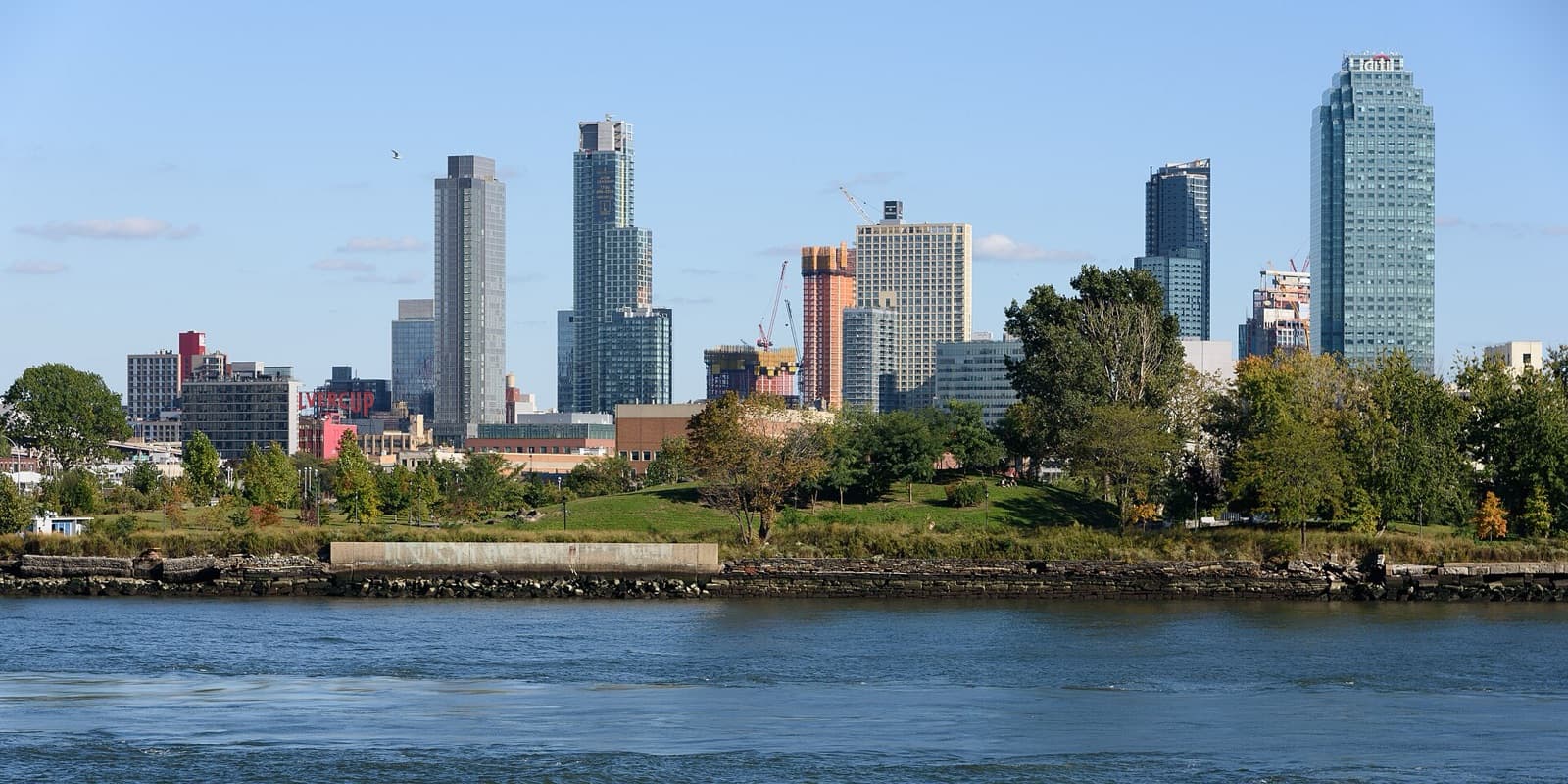
King of Hearts — CC BY-SA 4.0 · Wikimedia Commons
A listing photo shows a sunny living room and a caption that reads "zoned for PS 234." It sounds settled. But a zoned school in New York City follows the address, not the building, not the marketing copy, and not what the seller's child happens to attend — and the line that decides it can be moved by a vote. Before you let a school zone shape one of the largest purchases of your life, it pays to understand how those lines are drawn, how they change, and how to confirm them for the exact apartment you're considering.
This article is general educational information as of June 2026. It is not legal, tax, immigration, or financial advice. School zones, enrollment rules, and district boundaries change, and they are administered by official agencies — always verify with the NYC Department of Education and the specific school for the address you care about, and consult a licensed professional for advice about your situation.
District vs. attendance zone: two different lines
People say "school district" loosely, but two distinct boundaries are at work.
A school district is the jurisdiction of a governing body. Across the U.S. there are roughly 13,000 of them, and district lines affect things like school-board representation and, in many places, how school funding is organized. New York City is a single school system divided into 32 community school districts for elementary and middle grades.
An attendance zone is the finer line inside a district. It is a service area used for one purpose: to assign a specific school to a residential address. This is the "zoned school" you see on a listing. A home can sit in Community School District 3 yet be zoned to one particular elementary school on one side of a street while the building across the street is zoned to another.
Two practical consequences follow. First, "good district" and "zoned for a specific school" are not the same statement. Second — and this trips up many buyers — not every district even has zones. In New York City, a few districts (historically Districts 1, 7, and 23) are unzoned "choice" districts where families apply to schools across the district rather than being assigned by address. If you are shopping in one of those, the address-to-school logic works differently, and you should confirm how admissions priorities operate there.
How zone lines get drawn — and redrawn
Attendance zones are not permanent. They are drawn, and periodically redrawn, mainly in response to enrollment shifts: a new development adds families, one school fills past capacity while another has empty seats, or a building opens or closes. Districts weigh facility capacity, enrollment trends, and transportation when they redraw.
In New York City the process is public and has a clear approval gate. A district superintendent develops a rezoning proposal in coordination with the DOE's Office of District Planning and submits it to the local Community Education Council (CEC) — an elected parent body, one per community school district. The CEC must vote on the proposal, and DOE guidance gives the council a 45-day window to act after a proposal is submitted. Rezonings are debated in public meetings, sometimes for months, before a vote.
What this means for a buyer: a zone is a snapshot, not a guarantee. The school an address is zoned for today can change if the CEC approves a new map. Proposals are posted in the DOE's District Planning document library, and rezonings typically take effect at the start of a school year.
There is, however, a cushion most families care about. When zones change, currently enrolled students are generally not forced to switch schools, and rezonings are typically designed to apply to new entrants (incoming pre-K and kindergarten, and students new to the district) rather than children already attending. Sibling grandfathering is also commonly built in, so a younger child can often follow an older sibling already at the school even after a line moves. These protections vary by plan — confirm the specifics of any proposal that affects an address you're serious about.
How to verify a specific address
This is the part to do yourself, not to take on faith. A listing, a broker, or a current owner can all be sincerely wrong, because zones change and third-party data lags.
- Use the DOE's official "Find a School" tool. Enter the street address (leave off the apartment number) at the Department of Education's school search. The tool returns the zoned school for that location. This is the authoritative starting point.
- Call the school directly. Give them the exact address and ask the parent coordinator or front office to confirm it is in their zone. This catches edge cases — addresses near a boundary, recent line changes — that maps may not reflect yet.
- Treat listing-site school data as a hint, not a fact. Major portals attach "zoned school" labels to listings but pair them with a disclaimer that attendance-zone boundaries come from a third party, are not guaranteed accurate, and are subject to change. Useful for browsing; not proof.
- Check for pending rezonings. Look at the district's CEC and the DOE District Planning materials for any proposal that would redraw the zone you're counting on.
The table below sums up the difference between casual sources and verification.
| Source | What it tells you | Reliable enough to decide? |
|---|---|---|
| Listing / broker description | What the seller believes | No — a starting point |
| Listing-site "zoned school" tag | Third-party data, often dated | No — carries an accuracy disclaimer |
| DOE "Find a School" tool | Official zoned school by address | Yes — primary source |
| Phone call to the school | Confirmation for the exact address | Yes — catches edge cases |
If you'd like help mapping these checks against specific listings or buildings in a neighborhood you're considering, our team can walk through them with you — just contact our team.
The co-op and condo wrinkle
A frequent assumption is that "this building is in the zone," as if the whole property carries the school like an amenity. It doesn't. Zoning is assigned to the residential address, and within a single condo or co-op every unit shares that street address, so they share the same zoned school. That sounds reassuring, but it cuts both ways: the building's zone is only as stable as the zone line itself. If the CEC redraws the boundary, the entire building's zoned school can change with it — there is no separate protection because a unit is a co-op rather than a rental.
A few building-specific points worth checking:
- Large or newly converted buildings sometimes appear in marketing before their zoning is settled or widely indexed; verify with the DOE tool rather than the sales office.
- Buildings that straddle or sit near a boundary are exactly where listing-site data and word of mouth go wrong. Confirm by address, not by the building's reputation.
- New developments can themselves trigger a rezoning, because the families they add are part of what prompts a district to redraw lines. If you're buying into a brand-new building, ask whether any rezoning is pending. You can browse current projects on our new developments page, and the same verification steps apply to homes in gated communities, where district and zone lines run independently of the community's own boundaries.
None of this is meant to make school zoning sound treacherous — it's a routine, public, well-documented system. The point is simply that a zone is a current administrative fact about an address, not a permanent feature of a home. Treat it the way you'd treat square footage or tax figures: get it from the official source, in writing, for the exact unit, before it shapes your decision.
The takeaway
School zones in New York City are drawn by address, governed at the district level, and changed through a public CEC vote — which means the "zoned school" on a listing is accurate until it isn't. Confirm it yourself with the DOE's Find a School tool, back it up with a call to the school, watch for pending rezonings, and remember that a co-op or condo gets no special exemption from a line that moves. A few minutes of verification today is cheaper than a surprise the year your child is supposed to start.
Reminder: this is educational information only, current as of June 2026, and not legal, tax, immigration, or financial advice. Rules and boundaries change — verify with the NYC Department of Education and the relevant school, and consult a licensed professional for guidance specific to your circumstances.
Sources
- NYC DOE — Find a School: https://schoolsearch.schools.nyc/
- NYC DOE — District Planning (rezonings & Community Education Councils): https://schools.nyc.gov/about-us/planning-and-buildings/district-planning
- NYC DOE — Education Councils (CEC role and structure): https://www.schools.nyc.gov/get-involved/families/education-councils
- NYC311 — School Zones: https://portal.311.nyc.gov/article/?kanumber=KA-02991
- NYC DOE — Kindergarten Admission Priorities (zoned & sibling priority): https://enrollmentsupport.schools.nyc/app/answers/detail/a_id/3644/
- Urban Institute — how attendance boundaries differ from district lines: https://apps.urban.org/features/dividing-lines-school-segregation/
- Brick Underground — finding your zoned NYC school: https://www.brickunderground.com/buy/how-do-I-find-out-my-zoned-public-school-in-nyc
Let's talk about your next move.