
Neighborhood
A Buyer's Guide to Long Island City: Waterfront, Transit, and What to Look For
By Michelle Li · June 15, 2026 · 5 min read
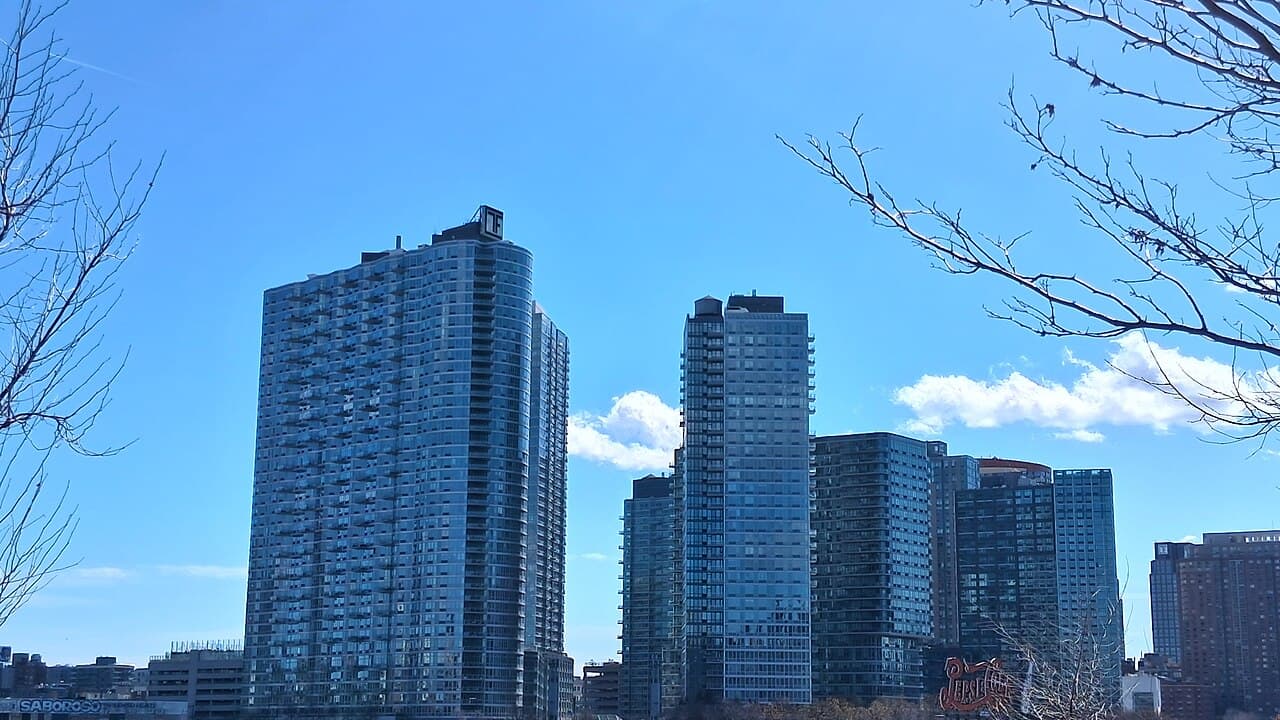
Long Island City sits on the Queens shoreline directly across the East River from Midtown Manhattan. Over the past two decades it has grown from an industrial waterfront into one of the city's most architecturally distinct residential districts — a place defined by glass towers, restored gantries, and an open horizon that most of Manhattan can no longer offer. For buyers weighing a new-construction condo, it rewards a close read.
The waterfront and its parks
The neighborhood's signature is the water. Gantry Plaza State Park anchors the southern stretch, where the restored Long Island Rail Road gantries frame the Manhattan skyline and the landmark Pepsi-Cola sign. Walk north and the green continues into Hunter's Point South Park, a contemporary waterfront design with lawns, an inlet, and some of the best uninterrupted views of the United Nations and the Midtown wall.
This ribbon of parkland is more than scenery. It shapes value: units with western and southern exposure toward the water and the skyline tend to command a premium, and the parks function as the neighborhood's shared front yard.
Getting to Midtown
LIC is unusually well connected for an outer-borough address. The lineup includes:
- The 7 from Vernon Blvd–Jackson Av and Hunters Point Av
- The E and M from Court Square, which reach Midtown Manhattan in minutes
- The G, useful for Brooklyn without crossing into Manhattan
- The NYC Ferry at Hunters Point, a scenic East River route
Few commutes in the city are shorter. From parts of LIC, a Midtown office is a single stop and a handful of minutes away — a practical advantage that holds its appeal across market cycles.
New construction and amenities
Much of LIC's housing stock is recent, which means buyers often choose between a brand-new tower and an early-2010s building. Newer developments tend to offer doorman service, fitness centers, residents' lounges, landscaped roof decks, and co-working space. Court Square and Hunters Point are the densest pockets; Vernon Boulevard keeps a lower-rise, main-street feel with cafes, bakeries, and restaurants at the sidewalk.
What buyers should look for
A few practical notes before you tour or make an offer:
- Exposure and sightlines. A skyline view today can be built out tomorrow. Ask what is zoned or under construction on neighboring lots.
- Tax abatements. Many new condos carry time-limited tax benefits; confirm the type, the remaining term, and what monthly costs look like once it phases out.
- The full carrying cost. Common charges in amenity-rich buildings add up. Read the offering plan and budget for the real monthly number, not just the price.
- Building track record. For newer construction, review the sponsor, the warranty, and any reserve studies.
- Timing. New developments often release inventory in phases, and resale supply moves with the seasons. A patient, pre-approved buyer has room to negotiate.
Long Island City is a neighborhood you understand best with a clear-eyed walk-through and a careful read of the numbers. If you'd like a current, address-specific view of what's available and what it really costs to own there, reach out — or browse our current listings to start the conversation.
Let's talk about your next move.