
Market Data
South Shore Nassau & Suffolk Long Island in 2026: A Market Read
By Si Zhang (Sunny) · May 24, 2026 · 8 min read
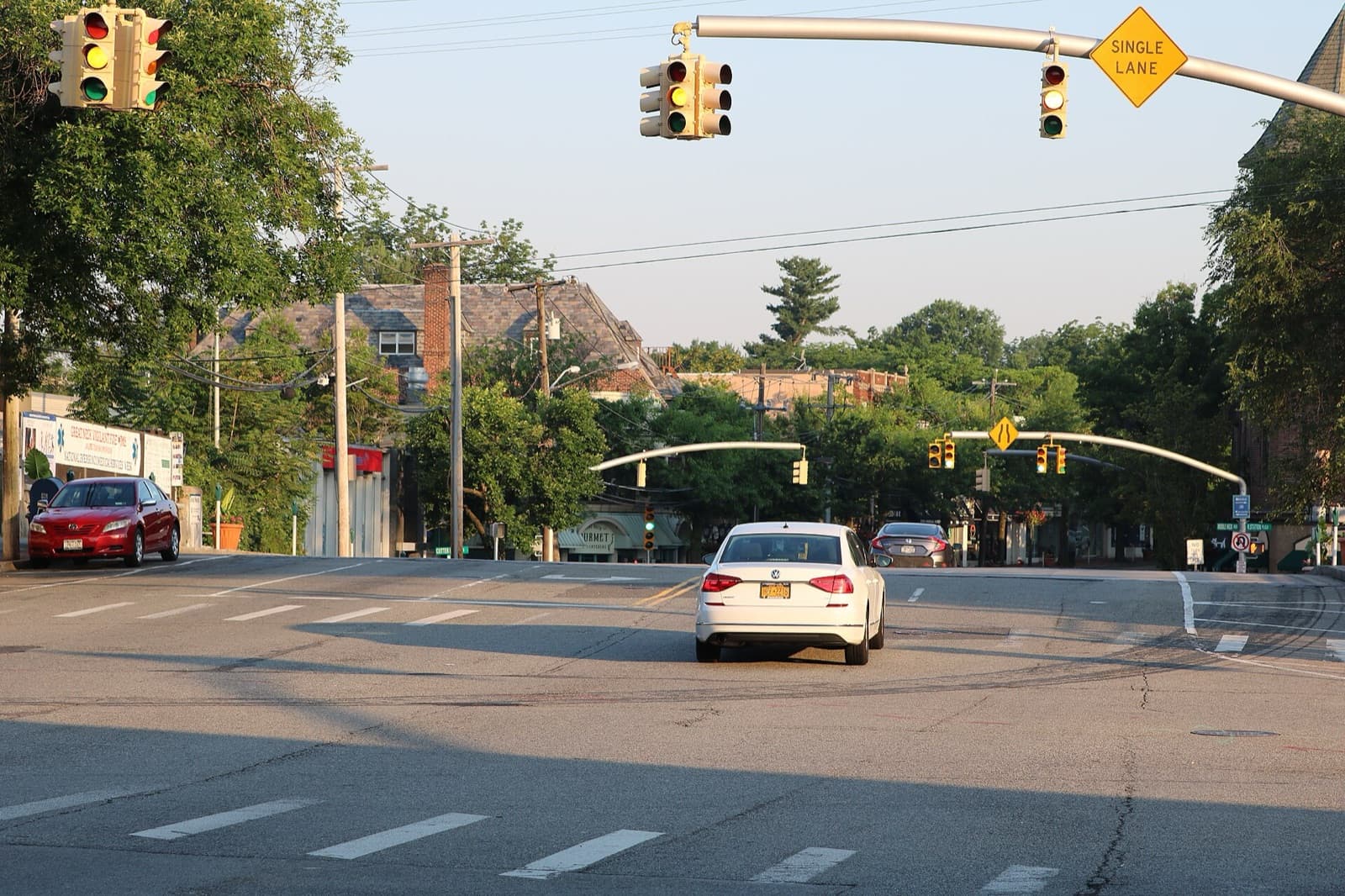
D. Benjamin Miller — CC0 · Wikimedia Commons
If you have spent any time looking at homes between the Wantagh Parkway and the eastern edge of Suffolk, you already know the feeling: a clean listing goes up on a Thursday, there are six cars in the driveway by Saturday, and it is in contract before the next weekend. That is not your imagination. It is the defining feature of the Long Island market right now, and understanding why is the first step to buying well.
This piece is a plain-spoken read on the South Shore — the towns strung along the bays and barrier beaches of southern Nassau and Suffolk — for buyers, newcomers, students settling in, and investors weighing the math.
As of late June 2026. Markets and rates move weekly; treat every figure here as a snapshot tied to its source and date, not a guarantee.
The headline numbers
Two authoritative datasets frame the region. The Elliman Report prepared by appraisal firm Miller Samuel covers Long Island excluding the Hamptons and North Fork. For the first quarter of 2026, it put the median sale price at $738,444, up 4.7% year over year and the third-highest on record. The average sale price reached $905,032 — an all-time high — and the entry point into the top 10% "luxury" tier began at $1,430,000.
For a county-level view, OneKey MLS (the regional multiple listing service, and the source Homix relies on) reported in its full-year 2025 analysis, published January 2026, that Nassau County's median climbed 5.9% to $805,000 on 9,799 closed sales — essentially flat in volume. Suffolk County saw sales dip just 0.4%, with sellers there averaging more than 100% of original list price. OneKey's April 2026 monthly report (released May 14, 2026) showed the broader 11-county service area at a $680,000 median, up 5.4% year over year, with closed sales down 8.7% — the pattern in miniature: prices firm, transactions thin.
| Metric | Figure | Source / as-of |
|---|---|---|
| Long Island median sale price | $738,444 (+4.7% YoY) | Elliman / Miller Samuel, Q1 2026 |
| Long Island average sale price | $905,032 (record high) | Elliman / Miller Samuel, Q1 2026 |
| Luxury tier entry (top 10%) | $1,430,000 | Elliman / Miller Samuel, Q1 2026 |
| Nassau County median | $805,000 (+5.9%) | OneKey MLS, full-year 2025 |
| Service-area median | $680,000 (+5.4% YoY) | OneKey MLS, April 2026 |
Why it feels so tight
The short answer is supply. Across the OneKey service area, homes for sale fell roughly 9% year over year and new listings dropped about 7% in the most recent readings. The mechanism is the "lock-in effect": a large share of current owners financed or refinanced at 3% to 4%, and moving today means giving up that rate. So they stay put, fewer homes hit the market, and the homes that do draw crowds.
The result on the South Shore is a seller-leaning market where well-priced, move-in-ready houses go quickly and often above ask, while overpriced or deferred-maintenance listings can sit. For a buyer this means two things: be financially ready before you tour, and do not assume the list price is the ceiling.
The rate that shapes your budget
Your monthly payment is driven less by the sticker price than by the mortgage rate. Per Freddie Mac's Primary Mortgage Market Survey, the 30-year fixed rate averaged 6.49% as of June 25, 2026, hovering in a narrow 6.47%–6.52% band through the month and down from 6.77% a year earlier. The Federal Reserve has held its policy rate steady into mid-2026, which is part of why mortgage rates have plateaued rather than fallen sharply.
What this means in practice: a quarter-point move in rates changes your payment more than a $25,000 change in price on a typical South Shore home. Get a real pre-approval, compare lenders, and run the numbers at today's rate rather than a hoped-for future one. If you want help modeling a specific town or price band, you can contact our team.
The commute math
For many South Shore buyers, the Long Island Rail Road is the deciding variable. The MTA's LIRR runs the Babylon and Montauk branches along the South Shore and the Ronkonkoma branch through central Suffolk, with trains feeding both Penn Station and Grand Central Madison in Manhattan, plus Atlantic Terminal in Brooklyn. Per MTA timetables current in June 2026, a trip from Ronkonkoma to Penn runs roughly 1 hour 15 minutes to 1 hour 28 minutes; inner South Shore Nassau stations are meaningfully shorter, and peak service runs every 20 to 30 minutes.
The trade-off is straightforward and worth mapping for yourself: every few stations east typically buys more house per dollar in exchange for more minutes on the train. Pull the actual timetable for your target station and your office's nearest terminal before you fall in love with a ZIP code. You can browse current listings and neighborhoods to anchor the search, and several South Shore areas include gated communities worth a look.
The flood-zone factor
The South Shore's defining geography — bays, inlets, barrier beaches — also means flood risk is a real line item, not a footnote. Per FEMA, much of the immediate South Shore sits in Special Flood Hazard Areas, commonly Zone AE (1% annual chance of flooding) and, in the most exposed coastal spots, Zone VE (wave action). If a home is in an SFHA, a federally backed mortgage will require flood insurance.
Pricing now runs through FEMA's Risk Rating 2.0, fully implemented in 2023, which sets premiums by property-specific factors — distance to water, elevation, replacement cost, flood type — rather than zone alone. The practical takeaway: get a flood-insurance quote and ask for an Elevation Certificate before you commit, because two houses on the same street can carry very different premiums. Build that cost into your monthly math from the start.
How to read this market as a buyer
Stability is the through-line: prices firm, inventory tight, demand patient and persistent. For a buyer that argues for preparation over speculation — clean financing, a realistic rate, a commute you have actually clocked, and an insurance number you have actually quoted. The newest inventory, including new developments, can sidestep some of the deferred-maintenance and flood-retrofit questions that come with older waterfront stock, though usually at a price.
A note on sources and advice
This article is general educational information, not legal, tax, immigration, or financial advice. Real estate, lending, insurance, and tax rules change, and figures here are tied to specific report dates. Before making a decision, consult a licensed real estate broker, mortgage lender, attorney, insurance agent, or tax professional, and verify current numbers with the official sources below.
Fair Housing note: Homix serves all buyers equally. We describe places by cost, transit, schools-as-logistics, and geography only — never by who lives there.
Sources
- OneKey MLS — corporate news & market statistics: https://corporate.onekeymls.com/about/news/market-statistics
- OneKey MLS — April 2026 housing market report: https://corporate.onekeymls.com/news/vmmh9tpxqb6gfcq2puahgxpncvn32a
- Elliman Report / Miller Samuel — Long Island market reports: https://millersamuel.com/market-reports/
- Douglas Elliman — market reports: https://www.elliman.com/corporate-resources/market-reports
- Freddie Mac — Primary Mortgage Market Survey: https://www.freddiemac.com/pmms
- MTA — LIRR timetables: https://www.mta.info/agency/long-island-rail-road/timetables
- FEMA — flood insurance & Risk Rating 2.0: https://www.fema.gov/flood-insurance/risk-rating
Let's talk about your next move.