
Market Data
Manhattan Rentals in 2026: Rents, Concessions, and Buy-vs-Rent
By Kevinn Li · May 21, 2026 · 8 min read
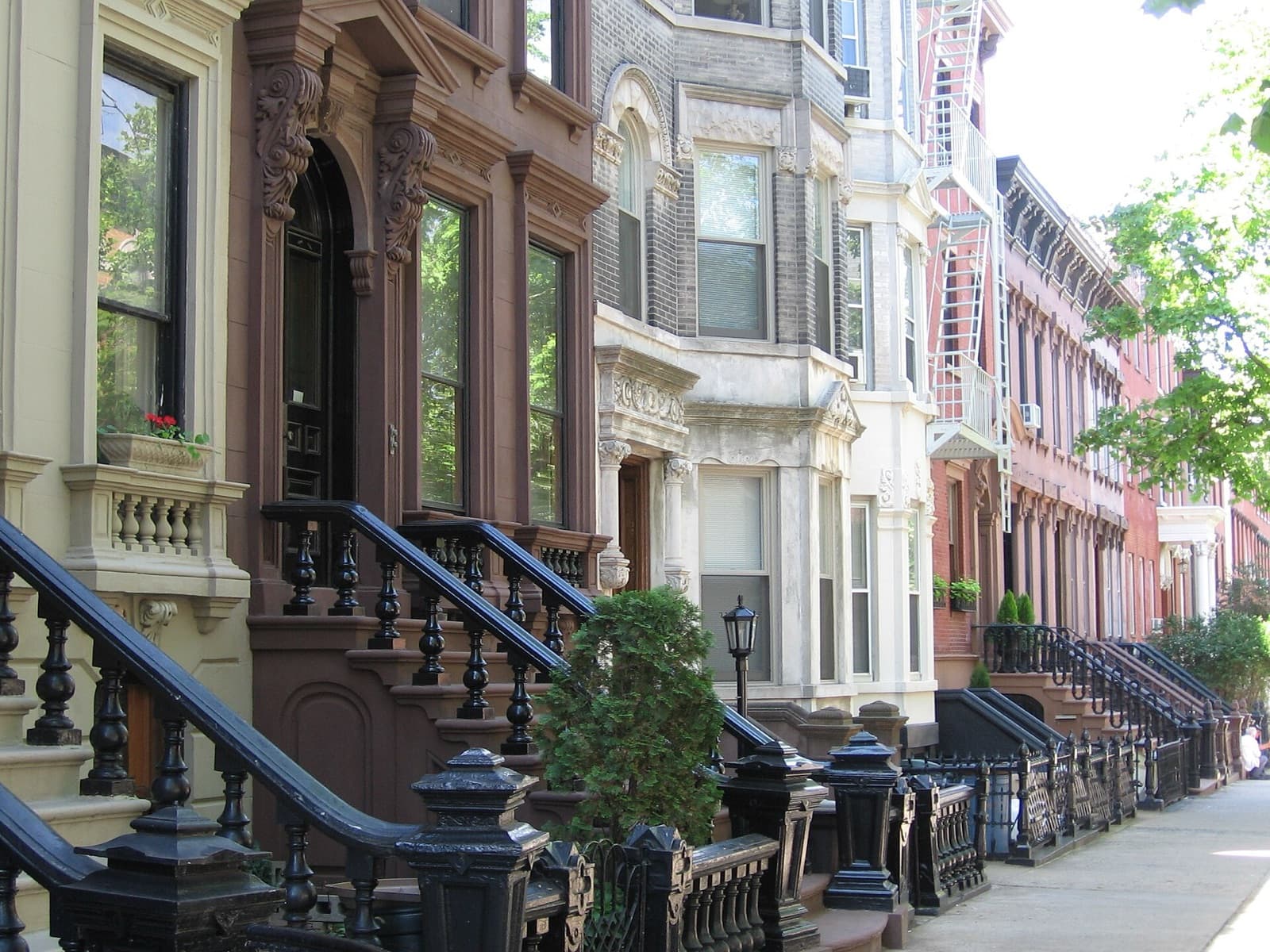
Kgwo1972 at English Wikipedia — Public domain · Wikimedia Commons
If you have apartment-hunted in Manhattan this spring, you already know the feeling: you find a listing you like, you message the agent, and by the time you've finished your coffee it's gone. The numbers back up the panic. In April 2026, Manhattan's median rent reached a new all-time high of $5,099, the vacancy rate fell to 1.55% — the lowest in more than six years — and active listings were down roughly 25% from a year earlier. This is one of the tightest rental markets the borough has seen in modern record-keeping.
For newcomers, students, and investors weighing greater-New-York options, this piece lays out what's verifiable, where the money actually goes, and how to think about renting versus buying at today's mortgage rates.
As of June 2026. Figures below are drawn from the Douglas Elliman / Miller Samuel and StreetEasy rental reports and from Freddie Mac's mortgage survey, with as-of dates noted. Rents and rates move month to month — treat every number as a snapshot, not a forecast.
What the median rent actually tells you
The "median" is the middle of the market: half of new leases signed for more, half for less. That $5,099 April figure (Douglas Elliman, via Miller Samuel) was up about 6% from a year earlier and capped a string of records — StreetEasy separately put Manhattan's median asking rent near record territory through early 2026, crossing $4,700 in February.
Two cautions before you anchor on one number. First, median rent is not your rent. It blends studios and four-bedrooms, walk-ups and doorman towers. A studio or one-bedroom in many neighborhoods sits well below the borough median; a large or new-construction unit sits well above. Second, asking rent and signed rent differ — asking is what landlords list, signed is what tenants actually agree to. In a tight market the two converge; in a soft market, signed rents come in lower.
| Metric (Manhattan) | Figure | As of | Source |
|---|---|---|---|
| Median rent (signed leases) | $5,099 | Apr 2026 | Elliman / Miller Samuel |
| Year-over-year change | ~ +6% | Apr 2026 | Elliman / Miller Samuel |
| Vacancy rate | 1.55% | Apr 2026 | Elliman / Miller Samuel |
| Median asking rent | ~$4,700+ | Feb 2026 | StreetEasy |
| Active listings vs. year ago | ~ −25% | early 2026 | StreetEasy / Elliman |
Concessions: the discount you have to ask about
A concession is a sweetener a landlord offers to close a deal — most often one or two months free on an annual or longer lease, sometimes a waived amenity fee. They matter because they create two different rents:
- Gross rent — the number on the lease you pay each of the 12 months.
- Net effective rent — the gross rent spread across the lease after the free month(s). On a $5,000 gross lease with one month free on a 12-month term, your net effective rent is roughly $4,583 — but you still owe the full $5,000 in every month you actually occupy.
When the market is this tight, concessions thin out: landlords with few vacancies have little reason to give months away, and the share of leases carrying a concession tends to fall in a low-vacancy environment like spring 2026. The practical takeaway is to always ask explicitly whether a unit comes with free months, confirm whether a quoted price is gross or net effective, and budget your monthly cash flow on the gross number.
What changed about broker fees
One genuine cost shift for renters: New York City's FARE Act (Local Law 119 of 2024) took effect June 11, 2025 and remains in effect in 2026. In broad terms, the party that hires the broker pays the broker — so when a landlord lists a unit through an agent, the tenant generally no longer pays that fee. Historically a tenant-paid broker fee could run one month's rent up to 15% of annual rent, several thousand dollars on a typical lease. The Act is being litigated, and it does not erase fees in every scenario (for example, if you hire your own broker to represent you). Confirm who pays before you sign, and get it in writing. This is logistics, not legal advice — see the disclaimer below.
The buy-vs-rent math at today's rates
The eternal question. With Manhattan rents at records, buying sounds tempting — but the math hinges on mortgage rates, and those are still elevated. Freddie Mac's Primary Mortgage Market Survey put the 30-year fixed rate at 6.49% as of June 25, 2026, hovering in the mid-6% range through the month.
Here's why that matters. On a $1,000,000 mortgage at 6.49%, principal-and-interest alone is roughly $6,300 a month — before Manhattan's property taxes, and before condo common charges or co-op maintenance, which commonly run $1,000–$3,000+ a month on a family-sized apartment. Stack those up and the all-in monthly cost of owning a typical Manhattan apartment can sit well above the $5,099 median rent, even though the rent number looks high in isolation.
That doesn't make buying wrong — it makes the comparison about more than the monthly number:
- Time horizon. Buying carries large up-front and exit costs (down payment, closing costs, mortgage tax, transfer taxes, broker commission on sale). The longer you'll hold, the more those amortize. Many buyers use a rough 5-to-7-year break-even rule of thumb, but your number depends on your price, rate, and building.
- Down payment and building rules. Many Manhattan co-ops require substantial down payments and post-closing reserves and must approve you in a board interview; condos are more flexible but typically pricier. This shapes what you can actually buy.
- Opportunity cost. A large down payment is capital not invested elsewhere — weigh that against the leverage and potential appreciation of owning.
- Flexibility. Renting keeps you mobile, which matters if your job, school, or immigration status could move you within a few years.
Run your own numbers with a buy-vs-rent calculator using a current rate, your real tax and maintenance figures, and an honest holding period. If you want to pressure-test a specific building, contact our team — we can pull comparable rents and recent sales side by side. You can also browse current listings, see what's coming in new developments, or compare neighborhoods on commute, cost, and logistics.
A practical playbook for 2026 renters
- Move fast and have papers ready. In a sub-2% vacancy market, the best units lease in days. Have proof of income, ID, and references assembled before you tour.
- Know the income test. Many landlords look for roughly 40x the monthly rent in annual income, or a qualifying guarantor — plan around this, especially if you're new to the U.S. or a student.
- Budget the move-in cash. Even without a broker fee, expect first month plus a security deposit (capped at one month's rent under NY state law) up front.
- Read the lease for renewal terms. In a rising market, a longer initial term can lock in today's rent; ask what renewals have looked like in the building.
Disclaimer
This article is general educational information for greater-New-York renters and buyers, not legal, tax, immigration, or financial advice. Rules, rents, and rates change frequently and individual situations vary. Verify current figures with the official sources below, and consult a licensed real-estate broker, attorney, tax professional, or financial advisor before making a decision. Homix is a licensed New York real estate brokerage and is an Equal Housing Opportunity provider.
Sources
- Douglas Elliman / Miller Samuel — Manhattan rental market reports: https://millersamuel.com/market-reports/new-york-city/
- Brick Underground — Manhattan rental market report, April 2026: https://www.brickunderground.com/rent/nyc-manhattan-brooklyn-rental-market-report-april-2026
- StreetEasy — Manhattan rental market data & reports: https://streeteasy.com/blog/nyc-housing-market-data/rentals/
- Freddie Mac — Primary Mortgage Market Survey (PMMS): https://www.freddiemac.com/pmms
- NYC Department of Consumer and Worker Protection — FARE Act / broker fee FAQ: https://www.nyc.gov/site/dca/about/FAQ-Broker-Fees.page
Let's talk about your next move.