
Property & market · Market
New Jersey Industrial Supply Tightens as Deliveries Fall
A Nov. 6 Bisnow report says New Jersey industrial deliveries fell sharply in the third quarter while absorption accelerated. Industry executives expect high borrowing costs and a difficult approvals process to restrain new supply, supporting owners of existing, well-located space.
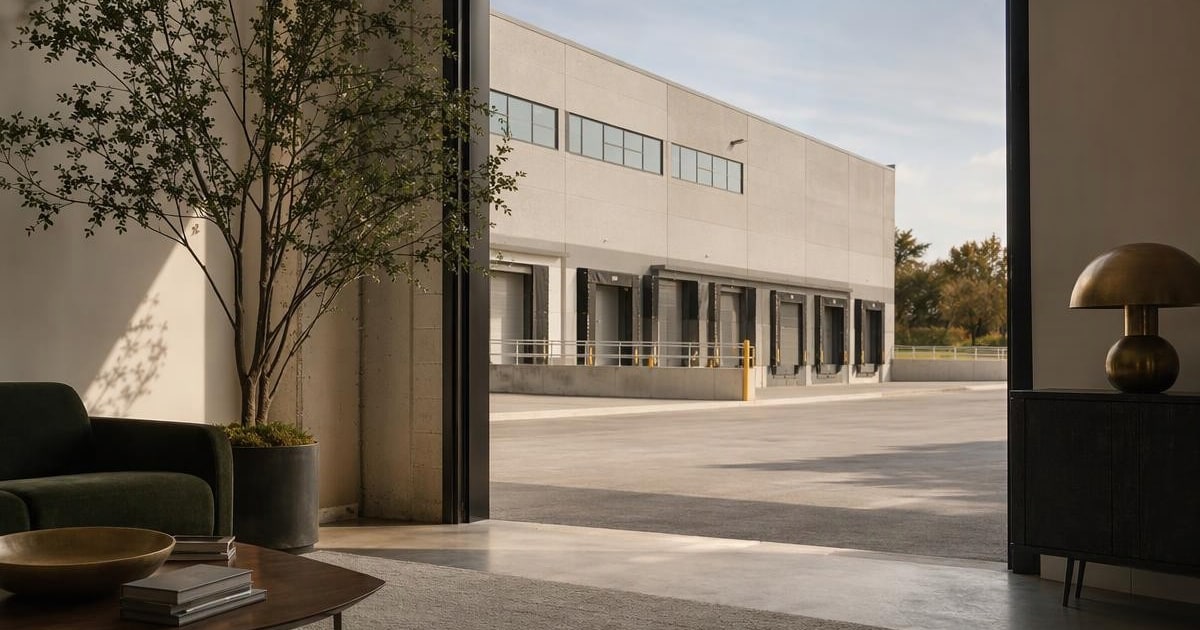
Deliveries retreat as leasing absorbs space
New Jersey industrial deliveries declined 58% year over year in the third quarter, according to Newmark data cited by Bisnow on Nov. 6. In northern and central New Jersey, net absorption reached 3.2M SF during the quarter, while year-to-date absorption totaled 7.4M SF—more than twice the full-year volume recorded last year.
That pace would put the market on track for its strongest year since 2022, according to the report. Speakers at Bisnow’s Northeast Industrial and Manufacturing Conference in October said consumer e-commerce demand, alongside demand from logistics users, continues to support warehouse requirements in the densely populated New York City and northern New Jersey region.
Large-space demand meets limited pipeline
Stonemont Financial Group’s Brian Danahy said tenant requirements total about 80M SF. Warehub founder James Holbrook said large tenants seeking 400K SF or more are moving quickly on available space.
Turnbridge Equities’ Ryan Nelson said only five buildings were under construction with deliveries expected over the following year. He said the limited pipeline could make large-format industrial space particularly scarce.
Approvals and financing constrain development
Executives also pointed to municipal zoning changes, warehouse size limits and local opposition as obstacles to new development. Greek Real Estate Partners had warned in a summer blog post that zoning no longer necessarily assures a developer can build at the size initially sought.
Prologis’ Mikki Columbus said the state’s entitlement process is difficult and cited a five-year Department of Environmental Protection permit among the processes that add uncertainty. Kurv Industrial’s Stefan Sansone said that, as a result, sites that secure approval can be difficult to replace.
High interest rates are another brake on purchases, investment and construction, Nelson said. JLL’s Jim Cadranell said constrained supply could help existing owners secure financing to carry properties through longer lease-up periods.
Landlord advantage may not mean rapid rent growth
The conditions favor owners of properly zoned, well-connected existing assets, Realterm’s Nick Dupuis said. But several speakers cautioned that tighter availability does not automatically translate into sharp rent increases.
Saxum Real Estate’s Anthony Rinaldi said lenders and equity partners may prioritize filling vacant space rather than holding out for the highest rent, particularly given borrowing costs. Cushman & Wakefield’s Helen Paul similarly said an inventory crunch may be near, but rent growth is likely to lag.
Homix perspective
The Nov. 6 report points to a tighter New Jersey industrial market for existing space, especially larger and well-connected facilities. Still, the cited executives expect financing conditions and lease-up priorities to temper near-term rent growth.
Source & further reading
Bisnow New York ↗Source published: November 6, 2026
This briefing is based on the cited original reporting and is general market education, not legal, tax, lending, or investment advice. Facts and rules can change; verify them with the appropriate licensed professional before a transaction.